
Negative Load Infrastructure
Modern grids are becoming constrained by when demand appears.
The next infrastructure opportunity may be reliable absence of load.
As electricity systems reprice around timing, thermal buffers and HVAC integration can shift load before peak stress appears.
What the report explains
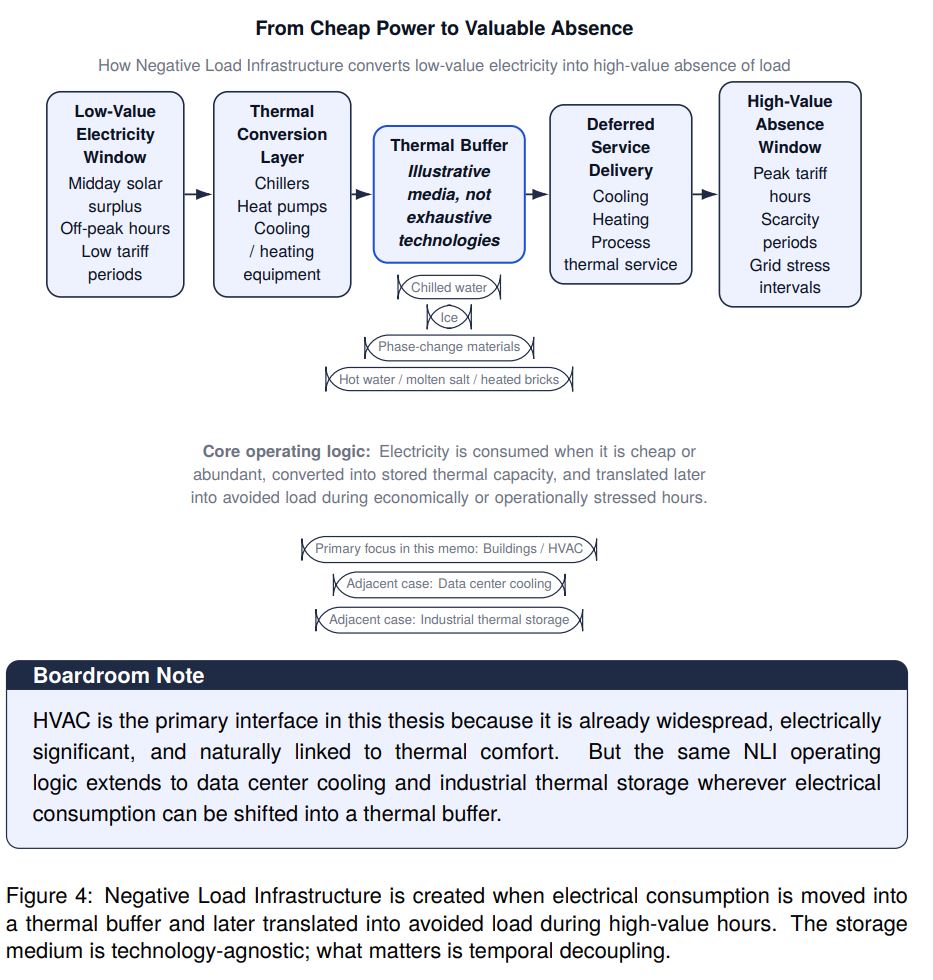
The report examines how buildings, thermal storage, tariffs, controls, and infrastructure capital can converge into a new timing layer of the power system — one where avoided demand becomes a contractible service.
Timing Scarcity
Why modern power systems are increasingly constrained by when electricity is consumed, not only by how much is produced.
HVAC as Interface
How buildings and HVAC systems can become grid-facing timing interfaces without behaving like generators.
Absence as Product
Why reliable avoided load can become measurable, repeatable, and contractible infrastructure value.
2026–2030 Window
How solar oversupply, cooling electrification, battery-market pressure, and peak stress create a deployment window.
A structural view of demand-side timing infrastructure
TaBIS reports use boardroom-style exhibits to clarify where structural value is emerging before the category becomes obvious to consensus capital.
For decision-makers exposed to timing, peak load, and grid flexibility
Infrastructure Investors
Evaluate where thermal buffers, avoided demand, and long-duration asset logic may become financeable infrastructure value.
Utilities & Strategics
Assess how predictable absence of load can support peak management, non-wire alternatives, and grid coordination.
Operators & Builders
Identify where buildings, campuses, HVAC systems, data centers, and industrial thermal loads can become timing assets.
Negative Load Infrastructure: The Untapped Timing Layer in Modern Power Systems
Purchase directly through Gumroad, or request access for institutional review, invoice, licensing, or direct purchase coordination.
Request Access Purchase Report